The dazzling spectacle of outdoor flexible screen displays masks a brutal battle against physics and the environment. Ensuring these sophisticated systems' survival hinges on overcoming profound interconnection challenges. Modern sealed circular connectors or rectangular multipin connectors are engineered to provide solutions that go far beyond basic waterproofing. They are the keystone that enables flexibility, durability, and performance to coexist.
The dazzling spectacle of outdoor flexible screen displays masks a brutal battle against physics and the environment. Ensuring these sophisticated systems' survival hinges on overcoming profound interconnection challenges. Modern sealed circular connectors or rectangular multipin connectors are engineered to provide solutions that go far beyond basic waterproofing. They are the keystone that enables flexibility, durability, and performance to coexist.
Let's delve into the specific technical hurdles these connectors must overcome and the innovative solutions deployed by leading manufacturers.
Technical Hurdle 1: Maintaining Seal Integrity Under Dynamic Conditions
Unlike static indoor screens, flexible displays may experience subtle panel movement or cabinet flexure due to wind loads and thermal expansion.
- The Challenge of Dynamic Sealing: Standard static seals can fail if the mated connector pair is subjected to twisting or bending forces. This can create micro-gaps for moisture ingress.
- The Solution: Using connector designs with floating contacts or compliant interfacial seals that can accommodate minor misalignment and movement without compromising the seal. Additionally, employing cable conduits with integrated strain relief that manages bend radius at the cabinet entry point protects the connector interface from external forces.
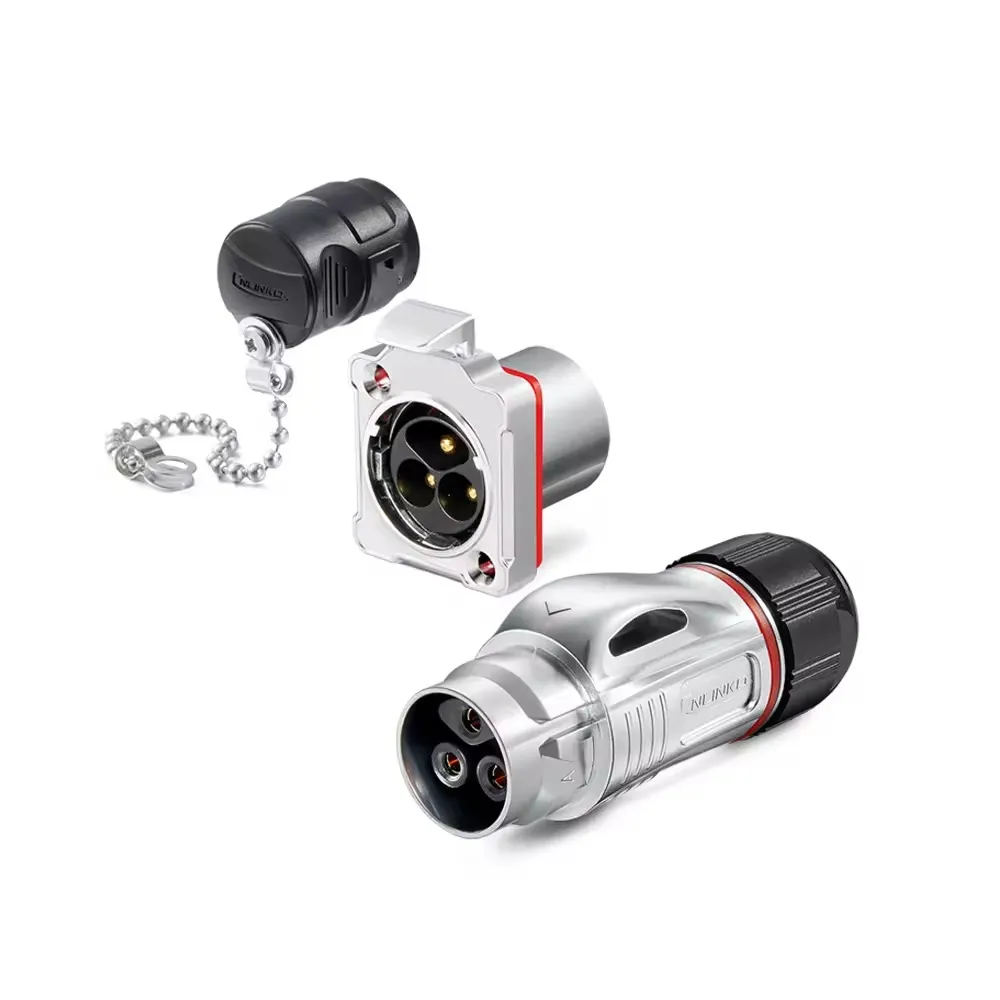 Technical Hurdle 2: Managing Thermal Loads in Confined Spaces
Flexible displays generate significant heat, and outdoor enclosures can trap it, creating a high ambient temperature environment.
- The Heat Challenge: Connectors must operate reliably at elevated temperatures (often >+70°C near drivers) without plastic housing deformation or seal degradation. High-current contacts also generate their own I²R heat.
- The Thermal Management Solution: Utilizing connector materials with high Comparative Tracking Index (CTI) and Heat Deflection Temperature (HDT), such as advanced PBT or PPS plastics. For power contacts, copper alloys with high thermal conductivity and strategic housing design help dissipate heat. Some designs integrate connectors into metal chassis plates to use the enclosure as a heat sink.
Technical Hurdle 3: Enabling High-Density, Modular Architectures
The drive for slim designs and modular components for easy repair pushes interconnection to its limits.
- The Space and Complexity Challenge: There's a need to transmit power, high-speed video, control data, and sensor feedback through a minimal number of access points in a thin cabinet profile.
- The Integrated Solution: The rise of hybrid connectors is key. A single connector shell can combine power pins, coaxial contacts for video (e.g., for SDI), and shielded signal pins for Ethernet or USB. This simplifies cabling, reduces installation errors, and saves space. Furthermore, board-mounted waterproof connectors enable easy "plug-in" replacement of driver or power supply modules without handling individual wires.
Innovative Technologies and Selection Guidelines
1) Leading connector manufacturers are deploying advanced technologies to meet these demands:
- Contact Protection: Gold plating over nickel underplating remains the standard for corrosion-resistant, low-energy contact surfaces, crucial for reliable low-voltage signal and power transmission in humid conditions.
- Advanced Sealing Materials: Liquid Silicone Rubber (LSR) injection-molded gaskets create seamless, high-reliability seals around complex pin layouts, superior to traditionally placed O-rings.
- EMI/RFI Shielding: 360° shielded connector designs with conductive gaskets ensure the entire mated interface becomes a continuous Faraday cage, protecting sensitive display electronics from interference.
2) Selection Checklist for Design Engineers:
- Certification First: Prioritize connectors with independent certifications for IP rating (IEC 60529), UV resistance (ASTM G154), and salt spray (ISO 9227).
- Think in Systems: Model the thermal environment and verify the connector's temperature rating exceeds your application's maximum ambient temperature plus internal temperature rise.
- Plan for Lifecycle: Choose connectors from suppliers with a long-term product roadmap and full support for field-attachable cable assemblies to simplify future repairs and logistics.

