Unlike electrical signals, light in a fiber optic cable carries data as photons, and its power is a precious, finite resource. At every interface, especially at the separable connection points, light is vulnerable to loss. This is why achieving and maintaining extremely low insertion loss in fiber optic connectors is not merely a desirable specification; it is the foundational requirement that dictates the feasibility, cost, and performance of the entire optical link.
In the high-stakes domain of optical communication—the backbone of global internet infrastructure, data centers, and 5G networks—signal integrity is paramount. Unlike electrical signals, light in a fiber optic cable carries data as photons, and its power is a precious, finite resource. At every interface, especially at the separable connection points, light is vulnerable to loss. This is why achieving and maintaining extremely low insertion loss in fiber optic connectors is not merely a desirable specification; it is the foundational requirement that dictates the feasibility, cost, and performance of the entire optical link.
Insertion loss (IL), measured in decibels (dB), quantifies the signal power lost when light passes through a connector. In practice, this represents the attenuation caused by the connector joining two fiber ends. In a world moving toward Terabit speeds and dense wavelength-division multiplexing (DWDM), where dozens of channels coexist on a single fiber, every fraction of a decibel matters.
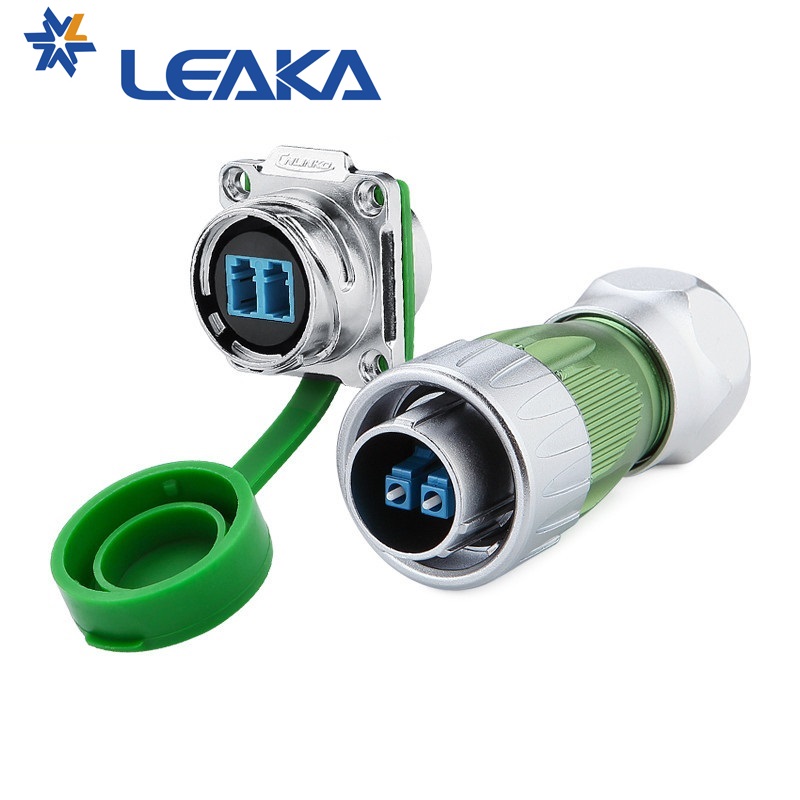 The Direct Impact: Link Budget and System Economics
The necessity for low insertion loss is fundamentally driven by the optical link budget—a simple yet critical power accounting equation:
Available Power = Transmitter Output Power - Receiver Sensitivity - Total System LossTotal System Loss includes fiber attenuation, splice losses, and the cumulative loss from every connector (mated pair) in the path. Connectors are typically the highest discrete loss points.
- Determining Reach and Architecture: Each decibel of unnecessary connector loss directly reduces the available power margin. This can force network designers to add expensive optical amplifiers (EDFAs) sooner, reduce the maximum distance between nodes, or use more sensitive (and costly) receivers. In a long-haul submarine or terrestrial network with hundreds of connections, a saving of just 0.1 dB per connector can translate to extending the unamplified span by several kilometers.
- Enabling High-Density Multiplexing: In modern DWDM systems, channels are tightly spaced. Higher connector loss reduces the signal-to-noise ratio (OSNR). To maintain error-free transmission, this may necessitate lowering the number of channels or reducing data rates per channel, directly impacting the system's total capacity and financial return.
- Cost Amplification: Beyond component costs, high loss necessitates more frequent testing, troubleshooting, and maintenance. A single poorly performing connector in a data center spine link can be the root cause of intermittent errors, requiring hours of diagnostic work.
The Physics of Loss: Why Light Escapes at the InterfaceInsertion loss in a connector arises from three principal intrinsic and extrinsic factors, all centered on the imperfect junction between two microscopic glass cores (typically 9 microns for single-mode fiber).
- Core Misalignment (The Dominant Factor): The single most critical contributor. The mating ferrules must align the two fiber cores with sub-micron precision. Any lateral (axial), angular, or longitudinal (air gap) misalignment causes a portion of the light from the emitting core to miss the receiving core entirely. Modern connectors like the LC, SC, and MPO types are engineered to achieve consistent, ultra-precise alignment through tight-tolerance ceramic ferrules and precision guide pins (for MPOs).
- Intrinsic Fiber Mismatch: Even with perfect alignment, differences between the two fibers themselves cause loss. Variations in mode field diameter (MFD)—the actual light-carrying area of the core—create an intrinsic mismatch. While manufacturers control this tightly, it remains a fundamental limit.
- End-Face Quality and Back Reflection: The fiber end faces must be polished to optical perfection.
- Scattering Loss: Any surface defect, scratch, or contamination scatters light away from the core. This is why proper cleaning is non-negotiable.
- Back Reflection (Return Loss): While related to a different metric, high back reflection from a poor end-face angle or air gap can indirectly affect source laser stability and system noise. Angled Physical Contact (APC) connectors, with an 8-degree polish, are used specifically to minimize this by reflecting light out of the core entirely.
The Engineering Pursuit of Sub-Decibel PerformanceThe industry standard for a high-quality single-mode connector mated pair is typically < 0.3 dB maximum, with 0.2 dB or lower as the premium target. Achieving this consistently requires a symphony of engineering:
- Ferrule Material and Precision: Zirconia ceramic is the material of choice for most ferrules due to its exceptional hardness, stability, and compatibility with precision grinding and polishing. Its coefficient of thermal expansion must be managed to maintain alignment across operating temperatures.
- Polish and Geometry: The end-face is polished to a specific geometry—UPC (Ultra Physical Contact) for a flat, domed finish or APC (Angled Physical Contact). The radius of curvature and apex offset are tightly controlled to ensure optimal physical contact, eliminating the air gap that causes both loss and reflection.
- Connector Mechanics: The spring-loaded ferrule system is crucial. It must provide sufficient, consistent force to press the fiber ends into intimate physical contact (for UPC) while allowing for repeated mating cycles without wear or force degradation. The connector housing and alignment sleeve (often phosphor bronze or ceramic) must maintain precise ferrule alignment despite vibration or handling.
- Cleaning and Inspection: From a system perspective, the lowest-loss design is irrelevant if the end-face is dirty. Implementing a culture of "inspect before connect" using fiber inspection microscopes (probes) is the final, critical step in achieving the designed low loss in the field.
Conclusion: The Margin of Victory in Optical NetworksIn fiber optics, light is data, and data is value. The insertion loss of a connector is a direct tax on that value. Pushing connector loss to its physical limits—from the common 0.5 dB of decades past to the 0.1-0.2 dB expected today—is what has enabled the exponential growth in network capacity without a proportional explosion in cost and complexity.
Therefore, specifying and validating low-insertion-loss connectors is an exercise in total system optimization. It requires choosing connectors from manufacturers who master ferrule fabrication and polishing, combined with rigorous field practices. For network engineers, this focus ensures that the weakest link in the optical chain is never the deliberate, designed connection point, but rather the fundamental physics of the glass itself. In the race for bandwidth, ultra-low insertion loss is not just a technical spec; it is the margin of victory.

