In the harsh realities of industrial environments, connectors face a relentless and invisible enemy: corrosion. From offshore oil platforms and coastal wind farms to chemical processing plants and winter roads laden with de-icing salts, the atmosphere itself can become a weapon of mass degradation.
In the harsh realities of industrial environments, connectors face a relentless and invisible enemy: corrosion. From offshore oil platforms and coastal wind farms to chemical processing plants and winter roads laden with de-icing salts, the atmosphere itself can become a weapon of mass degradation. This is precisely why salt spray (fog) testing has become a non-negotiable validation process for industrial connectors. It is the only way to prove that a connector's metallurgy, plating, and sealing can withstand the corrosive onslaught and maintain both mechanical integrity and electrical performance over decades of service.
Salt spray testing, often conducted per stringent international standards, is not merely about checking for surface rust. It is a forensic examination of a connector's ability to survive in environments where failure is not an option.
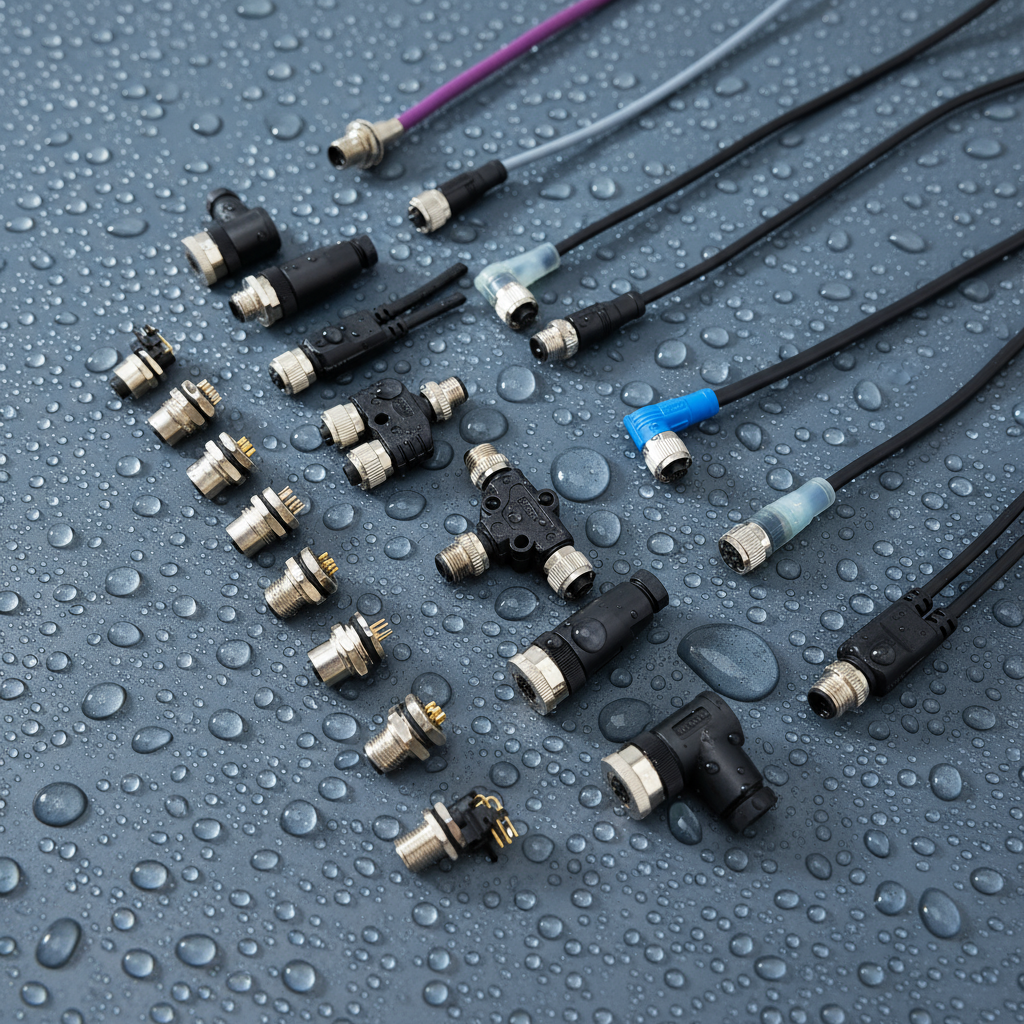 Understanding the Salt Spray Test: Simulating the Worst
Salt spray testing is an accelerated environmental test designed to evaluate the corrosion resistance of materials and protective coatings. The test involves placing connectors in a sealed chamber and exposing them to a continuous, fine mist of a 5% sodium chloride (NaCl) solution at an elevated temperature (typically 35°C). Exposure durations can range from 24 to over 1,000 hours, depending on the application's severity, with 48-96 hours being a common benchmark for many industrial applications.
The governing standards for this test are globally recognized:
- IEC 60068-2-11 (Test Ka): The foundational standard for salt mist testing of electrotechnical products.
- ASTM B117: The most widely referenced practice for operating salt spray apparatus, used across countless industries.
- EIA 364-26: A specific standard for evaluating electrical connector components and finishes under salt spray conditions.
Why Industrial Connectors Are VulnerableIndustrial connectors are deployed in environments where corrosive agents are abundant:
Marine and Offshore Applications: Connectors on ships, oil rigs, and coastal facilities are bombarded with airborne salt particles. Chloride ions penetrate protective oxide layers on metals, initiating pitting and crevice corrosion. As seen in the demanding conditions of the Norwegian North Sea, even high-grade materials like conventional steels can fail prematurely, leading to the adoption of titanium for its superior corrosion resistance in subsea and topside applications.
Transportation and Infrastructure: Road salts used for de-icing in winter create a highly corrosive slurry that splashes onto connectors in vehicles, traffic control systems, and roadside infrastructure. This is a primary reason why automotive connectors, especially those in underbody locations, must pass rigorous salt spray validation.
Chemical and Industrial Processing: Plants handling acids, alkalis, and other aggressive chemicals create atmospheres that accelerate the corrosion of unprotected metal surfaces.
The Test's True Purpose: Beyond Surface AppearanceA critical insight from industry experts is that the salt spray test's primary validation target is contact resistance reliability, not merely cosmetic appearance.
- Detecting Coating Defects: The test is particularly effective at revealing discontinuities in metallic coatings, such as pores, cracks, or insufficient thickness. A single pinhole in a gold or tin plating can allow corrosive attack on the underlying base metal (typically copper alloy), leading to the formation of non-conductive oxides that spike contact resistance.
- Assessing Seal Integrity: Connectors designed with environmental seals (gaskets, O-rings, potting) must prove that these barriers prevent salt-laden moisture from wicking into the contact interface. A seal failure in the test chamber predicts a field failure in a humid, salty environment.
- Evaluating Mated vs. Unmated Conditions: Standards often specify testing both mated and unmated connector samples. This reveals whether the mating interface itself provides some protection or if critical surfaces remain exposed.
However, it is essential to understand the test's limitations. Salt spray results do not always directly correlate with long-term performance in natural environments. It is an excellent comparative tool for evaluating different plating systems and designs, but should be corroborated with other environmental data and, where possible, long-term atmospheric exposure studies.
Engineering for Resistance: The Material and Design ResponsePassing salt spray requirements demands a holistic design strategy:
- Plating Systems: The choice of contact plating is paramount. Thicker gold over nickel underplating provides a robust barrier. For tin-plated contacts, the failure mechanism shifts; the oxide that forms is less conductive but can be disrupted by the mating action, though vibration-induced fretting corrosion remains a concern better evaluated by other tests.
- Base Metal Selection: In extreme cases, such as the subsea oil and gas sector, manufacturers are turning to exotic materials like titanium for connector bodies, which offer inherent resistance to high-chloride environments without relying solely on coatings.
- Housing and Sealing: Advanced engineering plastics (PPS, PBT, LCP) with high chemical resistance, combined with precision-molded seals, create a physical fortress that denies corrosive agents access to the critical internal interfaces.
Conclusion: Proving Longevity Before DeploymentFor an industrial connector, salt spray testing is the ultimate "prove it" moment. It is the laboratory gauntlet that simulates years of coastal exposure, road salt splashing, and chemical-laden atmospheres in a matter of days. Specifying a connector with a proven, high-hour salt spray rating is not an act of over-engineering; it is a fundamental risk mitigation strategy.
It ensures that the connector's gold-plated pins will not tarnish into insulators, its seals will not wick moisture to short circuits, and its housing will not crumble into brittleness. In the corrosive battlefields of industry, the salt spray test is the sentinel that guarantees the connection will hold—not just on day one, but for the life of the system.

